General
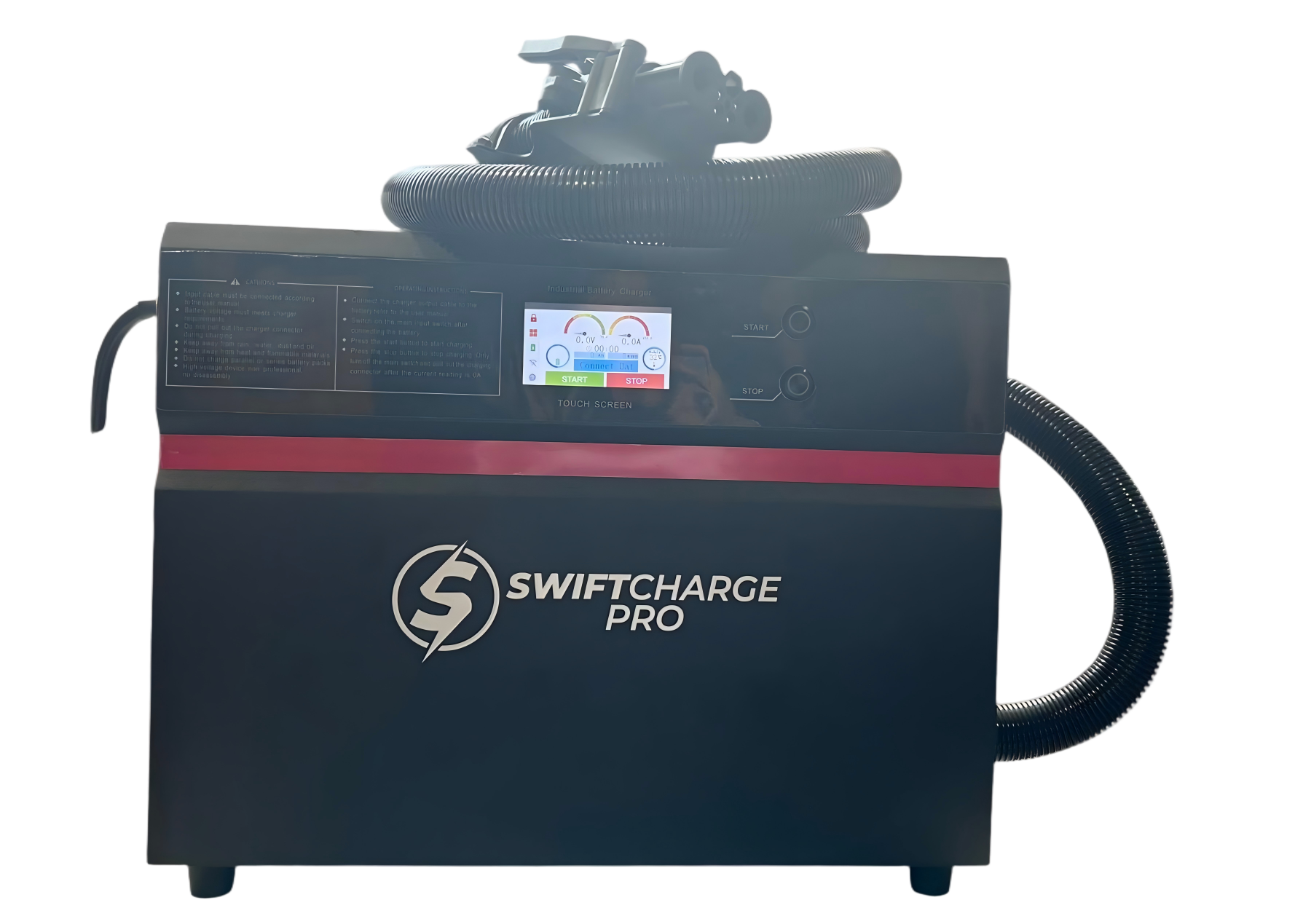
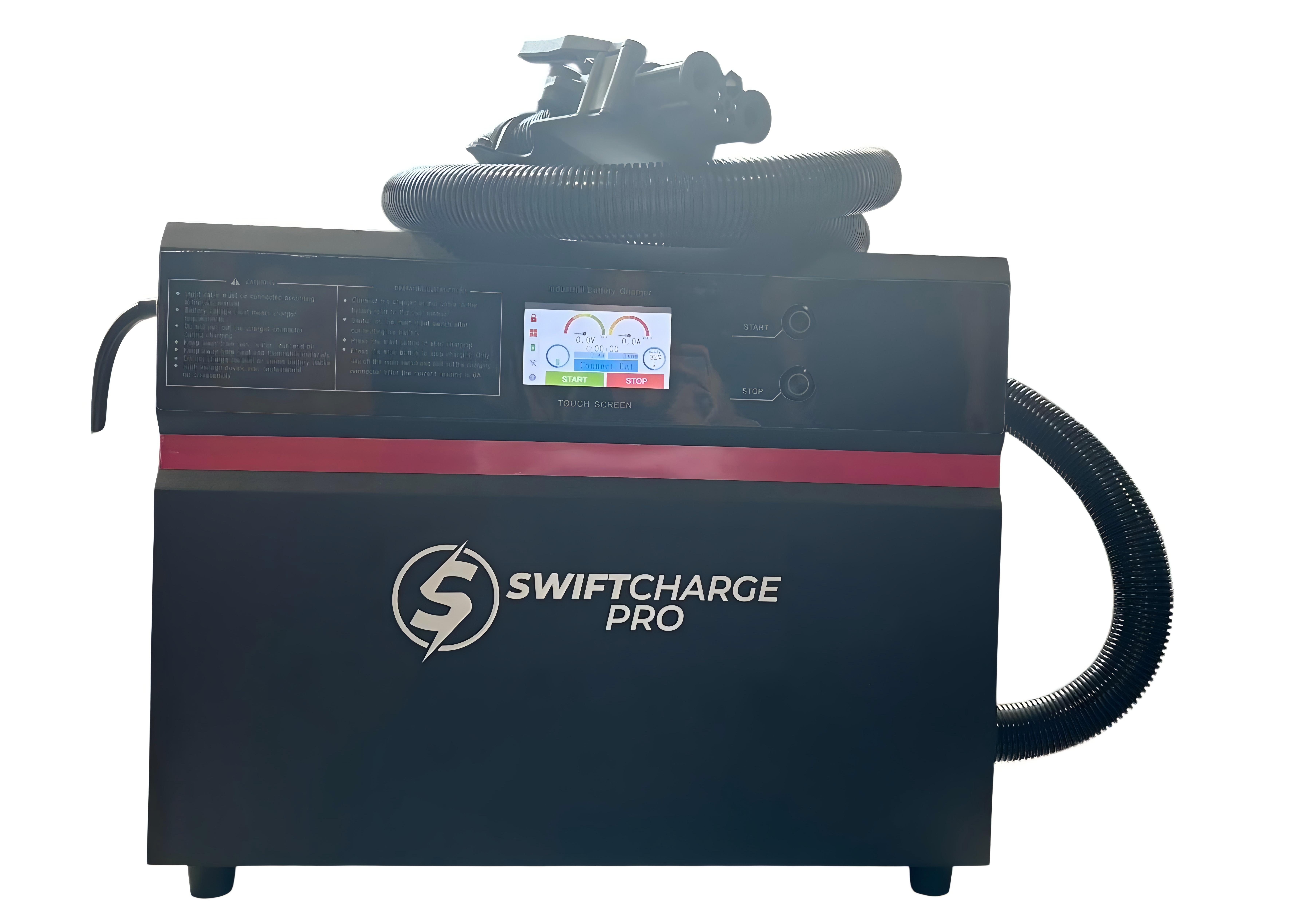
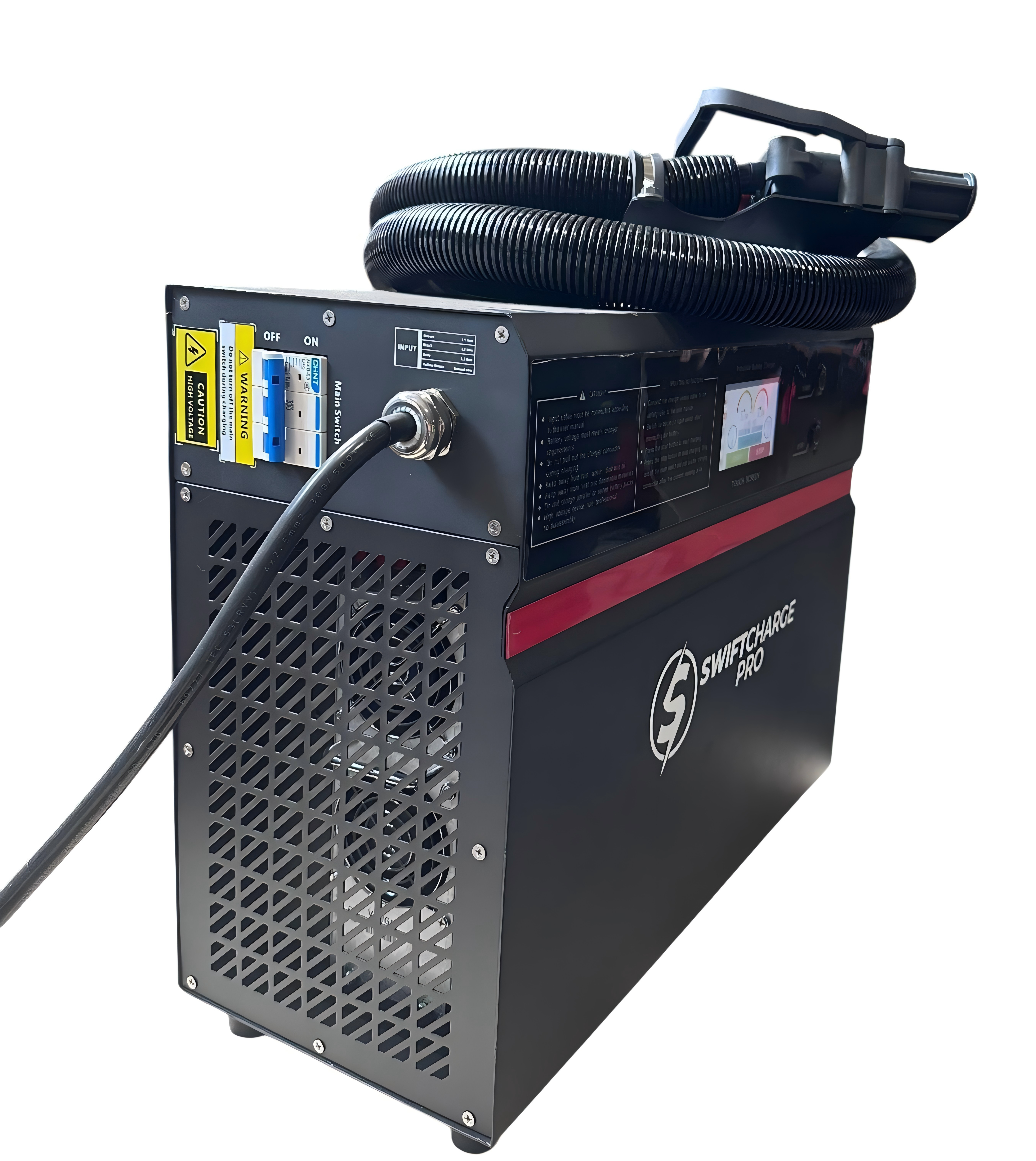
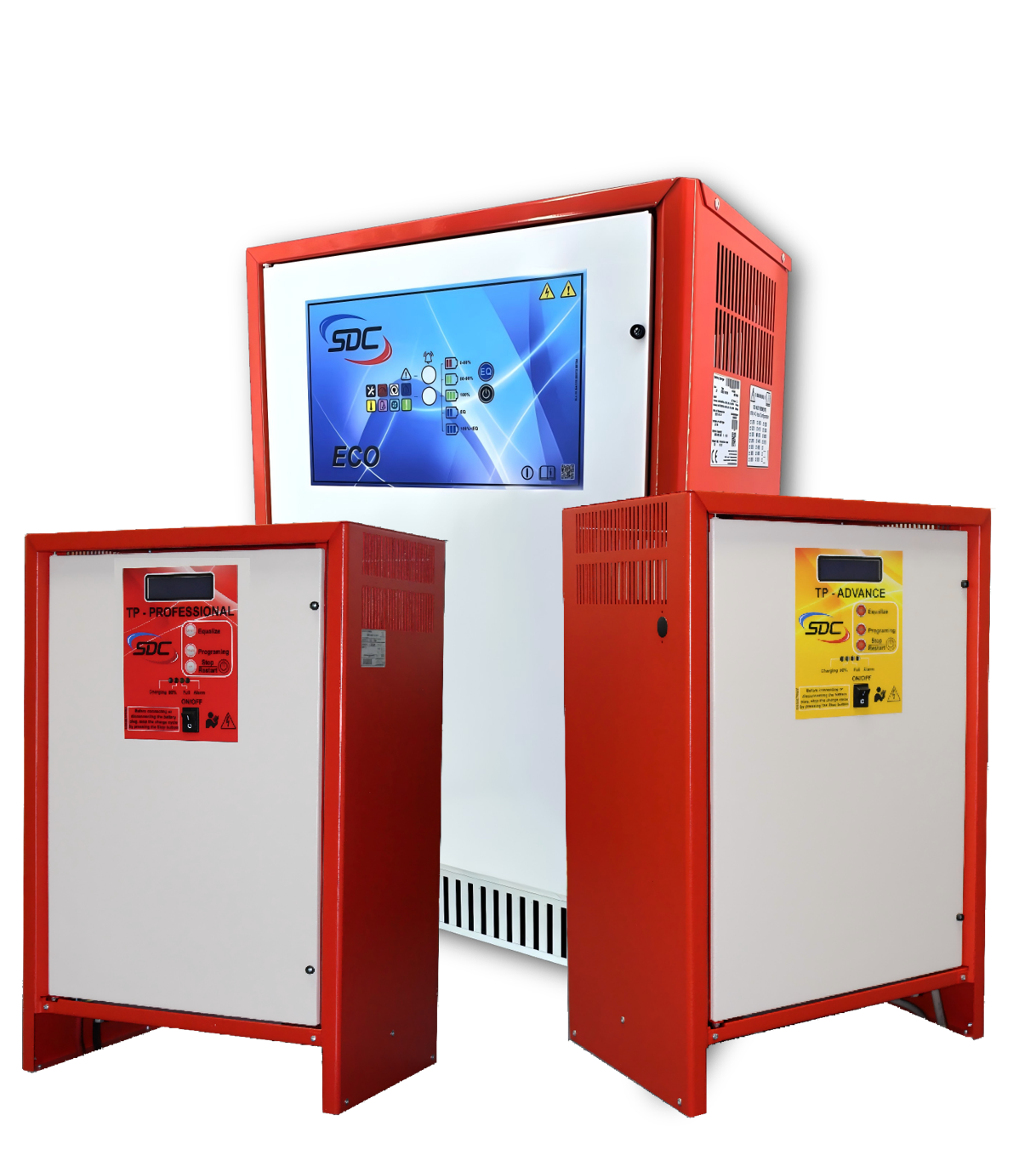
Q1: What is the difference between the SwiftCharge Pro HF QR Series and SCP HF Series?
A:The SwiftCharge Pro HF QR Series covers a wider power range (6kW to 40kW) and voltage spectrum (24V to 100V) for heavy-duty scenarios, with a touchscreen interface and reserved OTA capability. The SCP HF Series focuses on mainstream 48V and 80V forklift applications in a compact form factor. Both series feature a modular architecture for high reliability.
Q2: What types of batteries are these chargers compatible with?
A: They work with all common lead-acid battery types (flooded, AGM, gel) and lithium-ion batteries, with dedicated charging profiles to optimize battery performance and service life.
Performance & Efficiency
Q3: What is the charging efficiency of these chargers?
A: Peak charging efficiency reaches 95%, and efficiency stays at ≥94% across the 350–480VAC input range, effectively reducing operational electricity costs.
Q4: What input voltage range do the chargers support?
A: - SwiftCharge Pro HF QR Series: 260–520VAC three-phase input, rated for 380VAC
- SCP HF Series: 303–530VAC three-phase 4-wire input, rated for 380/480VAC
Both adapt flexibly to unstable grid conditions.
Q5: What built-in protection functions do the chargers have?
A:Full-spectrum protection includes input over/under voltage, output overcurrent, output overvoltage, short circuit, over-temperature, reverse connection and charging lock, ensuring stable operation in harsh industrial environments.
Application & Compatibility
Q6: Do these chargers support opportunity charging?
A: Yes. Both series are opportunity-charge ready for battery top-ups during shift breaks, which reduces or eliminates battery swapping and improves fleet uptime.
Q7: What industrial vehicles are these chargers suitable for?
A: They are designed for electric forklifts, material handling trucks, electric pallet trucks and lifting platforms, covering most heavy-duty material handling scenarios.
Q8: Can I customize charging profiles for specific batteries?
A:Yes. Standard charging curves are pre-installed, and custom profiles can be loaded via USB to match unique battery specifications and extend battery lifespan.
Installation & Maintenance
Q9: What installation options are available?
A: Both wall-mount and free-standing installation are supported to fit different warehouse and workshop layouts.
Q10: How does the modular design lower maintenance costs?
A: Independent parallel power modules keep the charger running even if one module fails. Faulty modules support hot-swap replacement without specialized tools, minimizing downtime and service costs.
Q11: What is the expected service life?
A: The SwiftCharge Pro HF QR Series has a 10-year design lifespan at 25°C ambient temperature. The SCP HF Series delivers an MTBF of 80,000 hours for long-term reliable operation.
Smart Features & Communication
Q12: What communication interfaces do the chargers offer?
A: - Standard CAN bus (250Kbps/500Kbps) for lithium BMS and vehicle system integration
- USB 2.0 port for firmware upgrades, charging data logging and profile updates
- SCP HF Series adds RS485, RS232 and WiFi; QR Series reserves WiFi/5G and OTA upgrade capability
Q13: Can I monitor and record charging data?
A: Yes. The USB function logs detailed charging data for analysis, and the digital display shows real-time charging progress, status and fault alarms for on-site management.
Q14: Do the chargers communicate with lithium battery BMS?
A: Yes. The CAN interface supports standard lithium BMS protocols (CAN2.0B/J1939) and custom protocols for seamless lithium system integration.
Compliance & Environment
Q15: What safety certifications do the chargers hold?
A: They comply with major global standards including CE, UL1564, CSA, GB and AS/NZS, and meet RoHS and REACH requirements.
Q16: What is the enclosure protection rating?
A: The SwiftCharge Pro HF QR Series features an IP21 enclosure rating, suitable for indoor industrial environments.
Q17: What is the operating temperature range?
A: - SwiftCharge Pro HF QR Series: -40°C to 70°C
- SCP HF Series: -20°C to 50°C
Both support a storage temperature range of -40°C to 70°C for diverse climate conditions.